
Fuse boxes weren't designed for today's electrical loads. HVAC systems, EV chargers, smart home devices, and kitchen appliances draw far more power than homes needed in 1965. Many insurance companies now flag outdated panels during underwriting, and buyers routinely ask sellers to replace them before closing.
This guide covers what fuse box replacement costs, the warning signs that mean it's time, and exactly how the process works. Tri-County Electric Service has served Northeast Ohio homeowners since 1975, giving us a close look at what these older panels do over five decades.
Key Takeaways
- Fuse box replacement typically costs $1,500-$4,500, depending on amperage and wiring condition
- Blown fuses, flickering lights, and scorch marks mean it's time to upgrade
- Expect inspection, permitting, installation, and a final code check
- Only a licensed electrician can perform this work safely and legally
What Is Fuse Box Replacement and Why It Matters
Fuses and breakers protect your home differently. A fuse burns out and must be physically replaced with a new one. A breaker trips and can simply be reset. When a fuse blows, homeowners sometimes install a higher-rated fuse just to stop the inconvenience. This is a serious fire hazard. A 30-amp fuse on a 20-amp circuit won't blow when it should, letting wires overheat undetected.
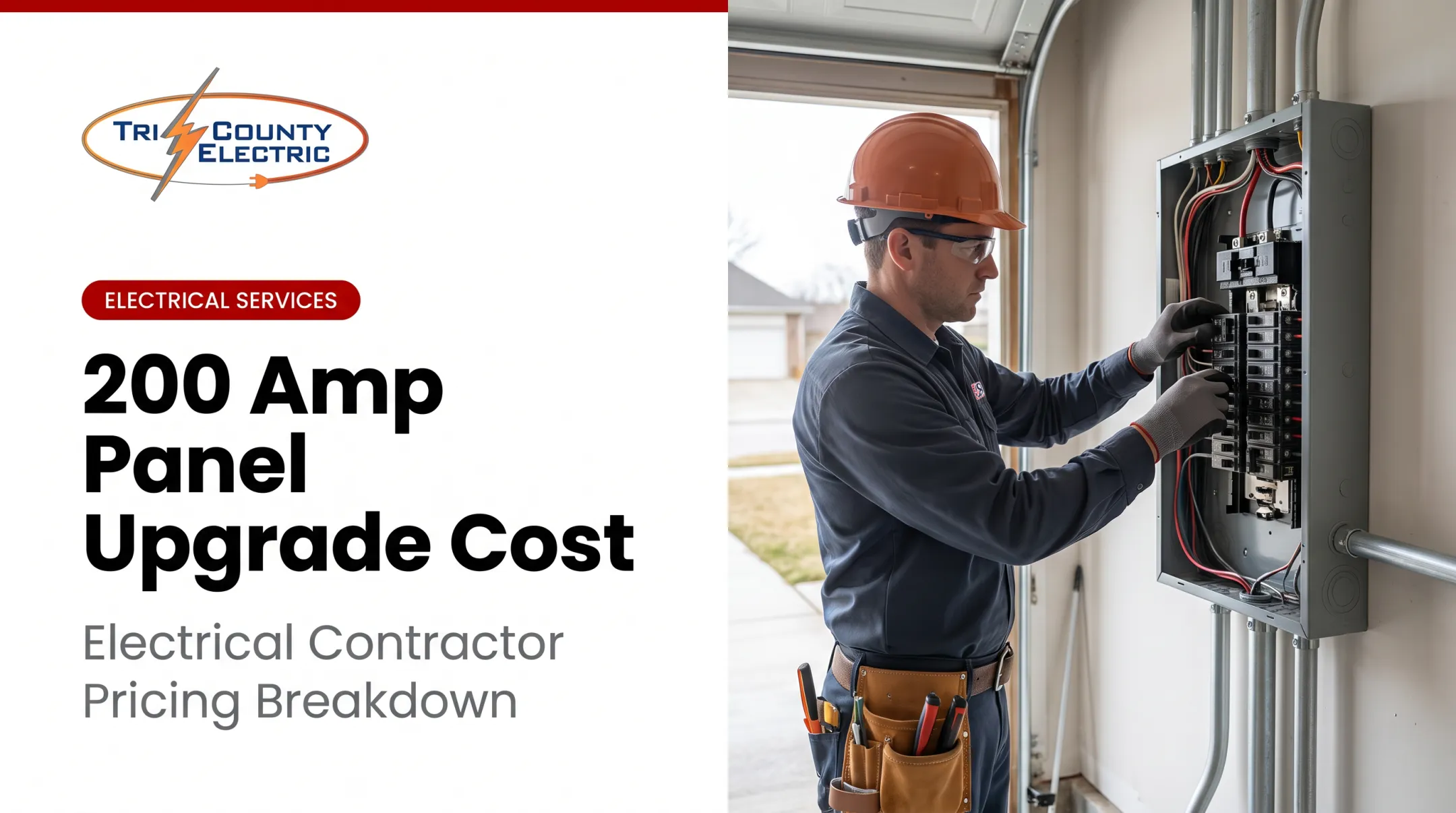
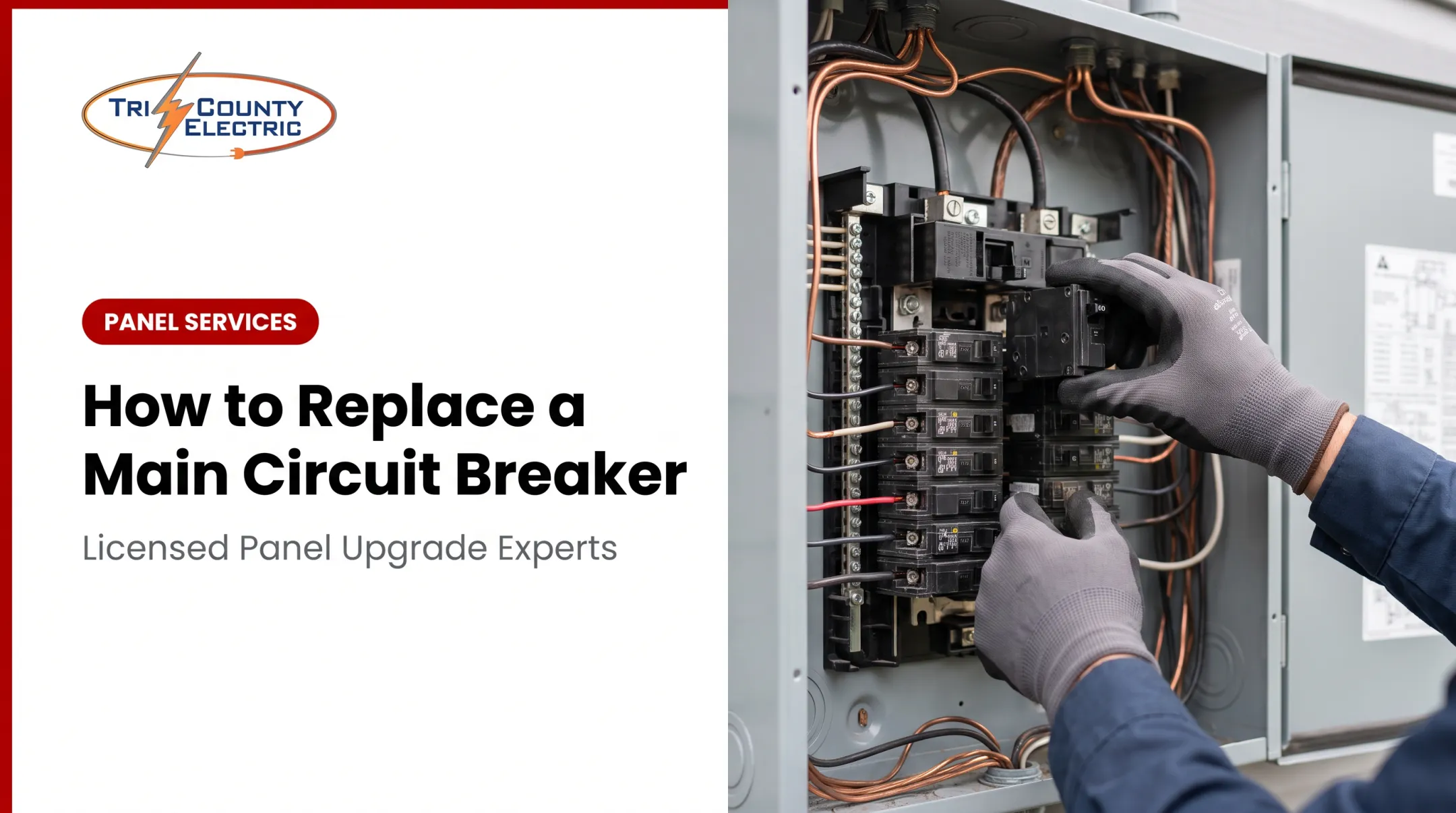
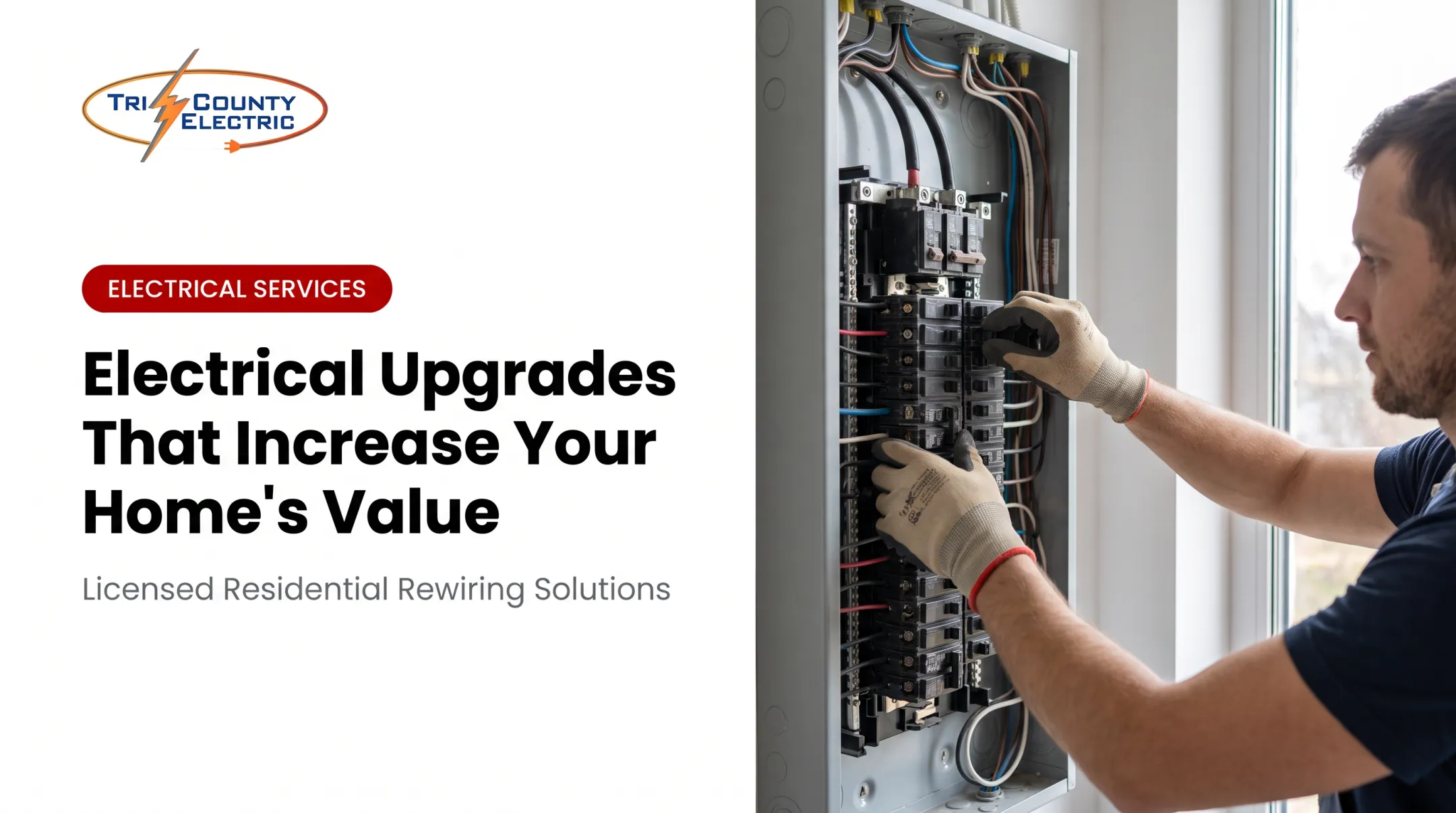
Replacement means removing the old fuse box entirely and installing a new breaker panel. Often this is paired with a service amperage upgrade, moving from an old 60-amp or 100-amp system to 200 amps.
That upgrade path does not mean every fuse box is an emergency. A well-maintained fuse box can function fine for years. The real risk comes from:
- Decades of corrosion at connection points
- Wear on internal components
- Electrical demand far exceeding original design
A full panel upgrade supports the loads modern households actually need:
- Central air conditioning
- EV chargers
- Standby generators
- Multiple large appliances running at once
As a Generac Certified Installer and Tesla EV Charger Certified Installer, Tri-County Services frequently sees how outdated panels limit these installations. A panel that can't handle a generator transfer switch or a Level 2 EV charger needs an upgrade before either can go in safely.

Signs You Need a Fuse Box Replacement
Certain warning signs point directly to a failing or undersized fuse box. According to NFPA's home electrical safety guidance, homeowners should call a qualified electrician for any of these:
- Frequent blown fuses — especially the same fuse repeatedly
- Scorch marks or a burning smell near the panel
- Flickering lights when appliances like the AC or microwave kick on
- Heavy reliance on power strips and extension cords because outlets are maxed out
Flagged Panel Brands
Some older panel brands carry documented risk beyond normal wear. Federal Pacific Electric (FPE) Stab-Lok breakers showed high failure rates in independent testing. Jesse Aronstein's engineering report on FPE breakers found that 51% of two-pole breakers failed to trip properly at 135% of rated current.
Zinsco panels have similar documented issues. Insurers note that a jammed breaker mechanism can appear "off" while still energized.
If your panel carries either brand name, get it inspected regardless of whether you're seeing problems yet.

Renovations and Insurance Triggers
Visible failure signs are not the only reason panels get replaced. Adding a bedroom, finishing a basement, or installing central air can trigger a permit review that exposes an outdated fuse box or panel. Insurers are also increasingly requiring upgrades before renewing coverage on older homes.
Fuse Box Replacement Cost Breakdown
Nationally, panel replacement runs $1,500 to $4,500, averaging around $3,000, according to Fixr's 2025 electrical panel cost data. Northeast Ohio homeowners should expect a similar range, though your final number depends heavily on scope.
Cost drivers to know:
| Scope | Typical Cost |
|---|---|
| 100A panel replacement | $1,000-$1,600 |
| 200A panel replacement | $1,600-$4,000 |
| 100A to 200A service upgrade | ~$3,000 |
| Meter base replacement | $200-$800 |
| Permit fees | $50-$300+ |
A basic panel swap is straightforward if your wiring is already up to code. A full 200-amp service upgrade costs more because it often involves new service conductors, a meter base swap, and grounding corrections.
Whole-house rewiring changes the math significantly. Older systems can push costs well beyond a panel swap alone:
- Knob-and-tube wiring: $12,000–$36,600 depending on size and accessibility, per Angi's knob-and-tube wiring guide
- Aluminum wiring replacement: often $10,000 or more
Labor typically makes up 40-60% of total project cost. That's why Tri-County offers free estimates with transparent, upfront pricing—so homeowners know exactly what they're paying for before work begins, without pressure to add services they don't need.

How the Fuse Box Replacement Process Works
Replacing a fuse box follows a set sequence, driven partly by Ohio code requirements.
- Inspection and planning. An electrician evaluates your panel, wiring condition, and current/future amperage needs. They check breaker connections, grounding, and signs of corrosion or overheating.
- Permitting. Ohio jurisdictions require an electrical permit for panel replacement. Cleveland, for example, requires permits for any new or temporary electrical work. Some cities also require a follow-up inspection before reconnection.
- Utility coordination. If your amperage or meter base is changing, the electrician coordinates with your utility provider (AEP Ohio or FirstEnergy, depending on your area) to schedule a disconnect date.
- Installation day. The electrician shuts off power, removes the old fuse box, and mounts, wires, and labels the new panel. Most panel upgrades finish in a single day, though larger projects can take longer.
- Final inspection and power restoration. A local inspector confirms code compliance before the utility reconnects power.
Tri-County's technicians walk through this same evaluation during the initial visit. They check circuit breakers, panel load distribution, and service entrance equipment, then provide a clear timeline before work starts.

Is It Legal or Safe to Keep an Old Fuse Box?
Most fuse boxes are legal to keep. Nothing forces you to replace one unless a renovation triggers a permit requirement or your local jurisdiction flags it during an inspection.
Safety is a separate question. Older fuse systems often cannot handle today's household loads, and a blown fuse does not always clear a fault as reliably as a modern breaker. That raises overheating and fire risk even when the box is still legal to leave in place.
Insurance impact: Carriers treat aging fuse systems and flagged panel brands seriously. Common outcomes include:
- Recommendations to replace fuse boxes and panels such as FPE Stab-Lok or Zinsco
- Higher premiums on homes that still use older fuse systems
- Occasional outright coverage declines
Ohio Department of Insurance guidance notes that terms vary widely by policy, so call your carrier before assuming either way.
Who's responsible for the panel? Generally, homeowners own and maintain everything from the panel to the outlets inside the house. The utility company is responsible for the service line up to the meter. If your fuse box fails or needs replacement, that cost and responsibility falls on you, not the utility.
Why Choose a Licensed, Certified Electrician
Panel work isn't a DIY project, and skipping the permit process creates real consequences.
Risks of unpermitted or DIY panel work:
- Voided homeowner's insurance if a claim is tied to unpermitted electrical work
- Complications during home resale when disclosure forms surface unpermitted changes
- Genuine safety hazards from improperly connected circuits
Some Ohio municipalities enforce this strictly. Painesville, for example, charges a $100 penalty plus doubled permit fees for work started without a permit.
A licensed electrician pulls the required permits and completes code-compliant panel work so you avoid those insurance, resale, and safety problems.
Tri-County Electric Service has operated since 1975, with licensed electricians handling panel work across Northeast Ohio, Southwestern Ohio, and Northern Kentucky.
The company offers flexible scheduling, same-day service for non-emergency panel issues, and 24/7 emergency response when something can't wait.
Frequently Asked Questions
How much does it cost to replace a fuse box?
Most fuse box replacements cost $1,500 to $4,500, depending on amperage needs and wiring condition. A basic panel swap costs less than a full 200-amp service upgrade with rewiring.
Can you replace a fuse box without rewiring?
Yes, if your existing wiring is already code-compliant. Older or damaged wiring, especially knob-and-tube or aluminum, usually requires at least partial rewiring alongside the panel swap.
How do I upgrade a fuse box to a circuit breaker panel?
The process involves an inspection, obtaining a permit, installation day (typically 4-8 hours), and a final code inspection before power is restored. See the process breakdown above for full details.
Is it illegal to have an old fuse box?
No, it's generally legal to keep an old fuse box. However, it can create insurance complications and safety concerns, so proactive replacement is worth considering even without a legal requirement.
Who is responsible for the main fuse in my house?
Homeowners are responsible for the panel and all wiring inside the home. The utility company handles the service line only up to the meter.