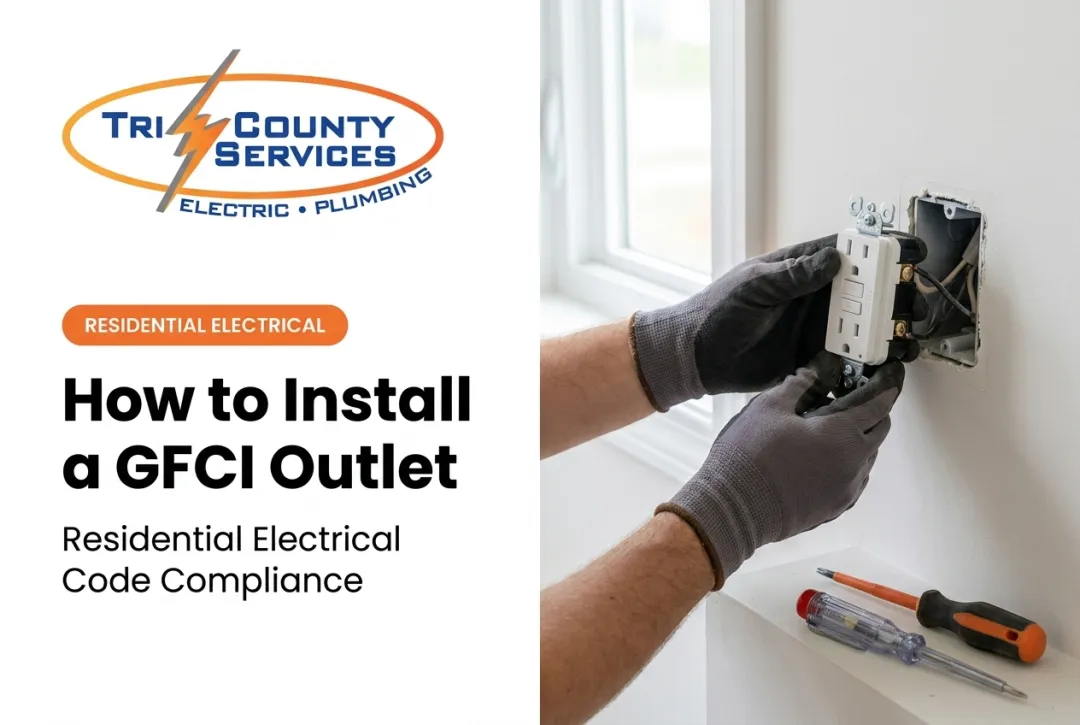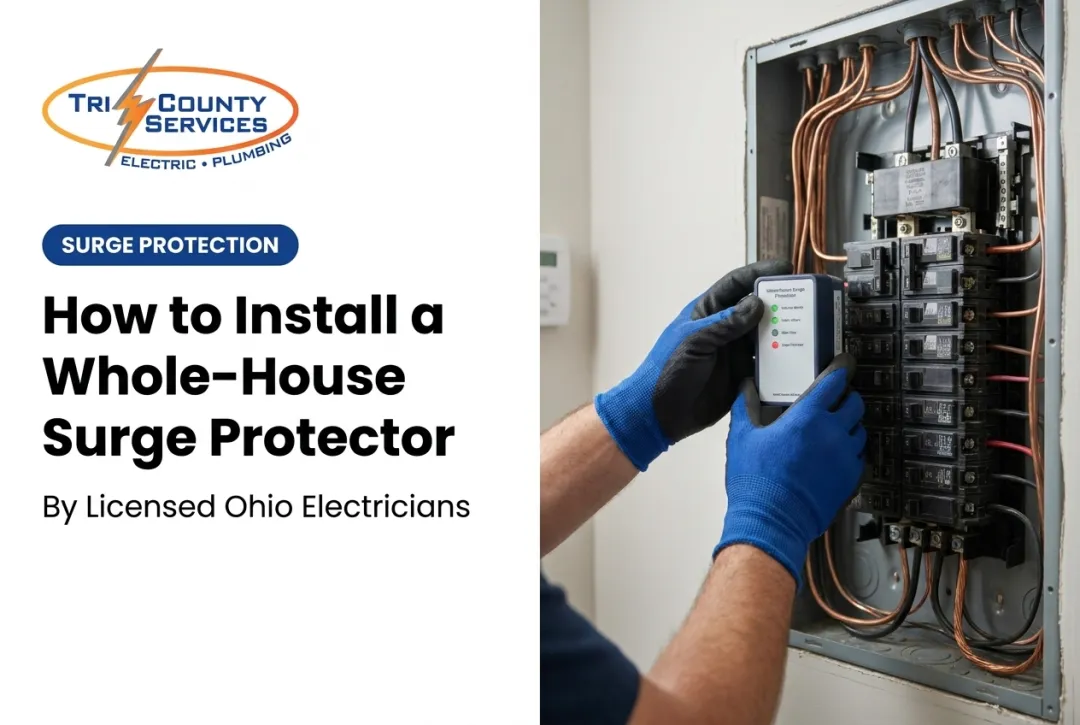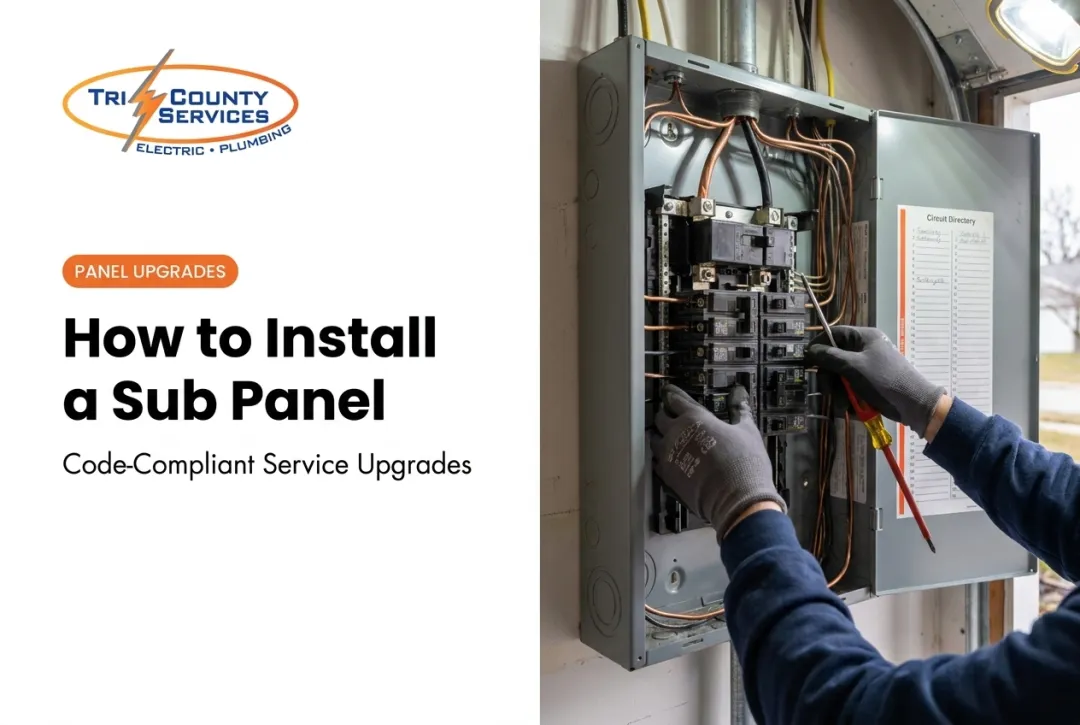

Some tasks are DIY-friendly. Swapping a light fixture or an outlet cover, for example. But panel upgrades, rewiring, and EV charger installs carry real risk if done incorrectly: fire hazards, shock, failed inspections, and voided warranties are all on the table.
During 2020-2024, U.S. fire departments responded to an estimated annual average of 46,652 home electrical structure fires, causing roughly 527 deaths and $2.4 billion in property damage every year. This guide walks you through the full process, from planning to final testing.
TL;DR
- Installation follows a sequence: prerequisites, planning, wiring, connection, testing
- Simple fixture or outlet swaps can be DIY; panels, rewiring, and EV chargers need a qualified pro
- GFCI/AFCI protection and proper grounding are non-negotiable, not optional extras
- Skipping final testing often hides arc faults and other problems that surface later
- Tri-County Electric Service (Generac and Tesla EV Charger Certified) handles generators, EV chargers, and full home wiring across Northeast Ohio
Residential Electrical Installation Guide
The process breaks into five stages. Each one builds on the last — skip a stage, and you risk rework later.
- Assessment
- Design and permitting
- Rough-in wiring
- Device installation
- Testing and inspection

Timelines vary widely:
- Fixture swap: 1-2 hours (Angi, 2026)
- Panel upgrade: 4-8 hours of labor
- Whole-home rewire: 3-10 days, longer for homes over 40 years old (Angi, 2026)
Most projects beyond basic swaps need a professional electrician coordinating with your local permitting office. Permit rules and inspection sequences are set by the authority having jurisdiction (AHJ) in your area, not a single national standard.
Prerequisites and Safety Considerations
Before any installation starts, check three things:
- Panel capacity - can the existing panel handle the new load?
- Wiring condition - is existing wiring intact, correctly sized, and free of damage?
- Device compatibility - will the new fixture or appliance match your home's voltage and amperage?
Site readiness matters too. Walls and attics need to be accessible, and the workspace should be clear before anyone starts pulling cable.
Code compliance is the other half of the equation. Local jurisdictions adopt and enforce the National Electrical Code (NEC), and your local AHJ decides permit requirements and inspection timing. Don't assume your neighbor's permit process applies to your project.
Non-negotiables:
- Never work on live circuits
- Never exceed panel capacity
- Never skip grounding
Tools and Parts Required
A basic toolkit covers minor jobs: wire strippers, a voltage tester, and a handful of junction boxes. For anything touching the panel or main wiring, you need code-approved materials and, often, qualified hands.
Common materials:
- NM cable (nonmetallic-sheathed, rated for dry/protected locations) and THHN/THWN-2 conductors for conduit runs
- Junction boxes sized to code
- Breakers matched to circuit load
- GFCI and AFCI outlets for protected areas

DIY-safe tools are limited to basic hand tools for cosmetic swaps. Panel work requires qualified equipment, testing gear, and permit sign-off. Substituting non-code-approved materials to save money isn't just risky. It will fail inspection outright.
How to Install Residential Electrical Systems (Step-by-Step)
Qualified residential installation follows a defined sequence. Skip a step, and you're looking at rework, failed inspections, or worse.
- Site prep and load assessment - Determine circuit needs room by room before touching a wire. This is where undersized circuits get caught early.
- Rough-in wiring - Run cable through studs and joists before drywall closes the walls.
- Installing devices - Outlets, switches, fixtures, and panel connections go in once rough-in passes inspection.
- Integrating specialty systems - Generators and EV chargers connect to the main panel, often requiring dedicated circuits and, for generators, a transfer switch.
That order is non-negotiable. Reverse it, and you tear into finished walls to fix a mistake a proper rough-in would have caught.
Specialty systems add another layer: generators need transfer switches, and EV chargers need dedicated circuits sized for continuous load. Tri-County Electric Service handles those integrations with Generac Certified and Tesla EV Charger Certified installers as part of full residential electrical work.

Post-Installation Checks and Validation
Never assume an installation is complete just because the lights turn on. Confirm it.
Your electrician should complete these checks before the job is signed off:
- Visual inspection of every connection for tightness and correct termination
- Continuity and voltage testing to verify the circuit behaves as designed
- Breaker function tests to confirm the breaker trips and resets properly
Functional Testing You Shouldn't Skip
Flip every switch and confirm each light and outlet works as expected.
Test GFCI trip function monthly with the built-in TEST button: press TEST, confirm power cuts, then press RESET and confirm power returns. The Consumer Product Safety Commission recommends this routine. If either step fails, have the GFCI replaced.
AFCI breakers get the same monthly test. If the breaker doesn't trip when tested, call a professional electrician for replacement.
Warning Signs of a Bad Installation
Contact a professional electrician if you notice:
- Warm or hot outlets to the touch
- Flickering lights, especially under load
- Breakers that trip without an obvious cause
Skipping validation doesn't mean nothing's wrong. It means problems like slow-building arc faults or hidden shorts stay hidden until they fail, often at the worst possible time.

Common Installation Problems and Fixes
Three issues show up again and again after residential installs.
Issue 1: Tripping Breakers
Problem: A breaker trips repeatedly after installation. Likely cause: Overloaded circuit or a wiring fault. Fix: Redistribute high-draw appliances across circuits. If trips continue, have a professional electrician inspect for a wiring fault—repeated trips mean the breaker is protecting you from a real hazard.
Issue 2: Flickering Lights
Problem: Lights flicker after a new installation. Likely cause: Loose connections or undersized wire gauge. Fix: Have a professional re-check and tighten every connection right away. Loose connections can overheat and create a fire risk.
Issue 3: GFCI/AFCI Nuisance Tripping
Problem: GFCI or AFCI outlets trip with no obvious trigger. Likely cause: Moisture, a faulty device, or wiring interference. Fix: Test with a different device plugged in first. If tripping continues, have a professional electrician diagnose the outlet and circuit.
Pro Tips for Installing Residential Electrical Systems Effectively
A few habits separate a smooth installation from a frustrating one.
- Place outlets and switches around furniture layout and daily habits, not bare code minimums
- Time electrical work with remodeling so you do not open the same wall twice
- Save permits, inspection results, and warranty paperwork where you can find them later
- Leave panel upgrades, whole-home rewiring, and specialty installs to certified professionals
Electrical work is not a place to experiment. Major installations and upgrades belong with a professional electrical contractor, not a weekend project. That includes new circuits for additions plus specialty work such as generators and EV chargers.
Tri-County Electric Service, family-owned since 1975, serves Northeast Ohio, Southwestern Ohio, and Northern Kentucky with professional, insured electricians. As a Generac Certified Installer and Tesla EV Charger Certified Installer, the team is equipped for those specialty jobs when a home project calls for them.
Conclusion
Installation quality directly determines whether your electrical system stays safe, performs reliably, and lasts. Cutting corners on planning, code compliance, or validation doesn't save time. It just moves the problem down the road, usually to a worse spot.
Prepare carefully, follow code, test thoroughly, and hire a professional electrician for anything beyond a simple fixture swap. Done right, you get safer circuits and a system you can count on for years.
When the work exceeds a simple fixture change, Tri-County Services provides qualified residential installation help with free estimates and upfront pricing.
Frequently Asked Questions
How much does electrical installation cost?
Costs vary widely by project scope: light fixture installation runs roughly $158–$1,021, while panel upgrades run $1,200–$2,000. A free estimate is the best way to price your specific project.
How much does it cost to replace a service entrance cable?
Meter-to-panel wire replacement typically runs $225–$500, depending on cable length, panel accessibility, and local permit fees. A professional quote locks in the exact price.
What are the types of electrical installations?
Residential electrical installations fall into three categories: new installations (new construction or additions), upgrades (panel or service upgrades), and retrofits (updating older wiring or devices to current standards).
What are the general rules for residential wiring work?
Wiring work must follow the National Electrical Code (NEC) as adopted by your local jurisdiction, with proper grounding and GFCI/AFCI protection in required areas. Professional electrician sign-off is required for most permitted work.
What is the service connection?
The service connection, or service point, is where the utility's power supply connects to your home's main service panel. It marks the boundary between utility equipment and your home's wiring.
Is normal house wiring AC or DC?
Standard residential wiring in the U.S. carries alternating current (AC), typically delivered as 120/240-volt single-phase service to the home's main panel.